

What is child support?
Child support is money paid by a parent for the support of a child. A court can order a parent to pay child support and does in almost every single case before the court. It is considered in the best interest of a child for child support to be paid. It is also possible for judges to order retroactive child support or “back child support” in some instances. For example, if you knew you had a child and intentionally avoided paying child support or did not provide financial assistance. Texas courts generally use the child support guidelines provided in the Texas Family Code to establish child support.
What is an “obligor?”
The person paying child support. Sometimes this person is referred to as an “NCP” or “non-custodial parent.”
What is an “obligee?”
The person receiving child support. Sometimes this parent is referred to as “CP” or “custodial parent.”
How long is child support payable?
Child support lasts until whichever happens later:
- The child turns 18; or
- The child graduates from high school.
However, if your child has a disability, child support can continue for as long as necessary for the child.
How do I pay child support?
Most people pay through wage garnishment. Texas requires income withholding orders. If you have an employer, it will start being garnished from your pay check after the judge signs the order. The judge will also sign what is called an “Income Withholding Order.” It usually takes a couple weeks to kick in and its a good idea for you to give a copy of both orders to your HR Department (or whoever does your payroll.) Otherwise, you can pay online at Office of the Attorney General or by check payable to the TX SDU (through the Office of the Attorney General). You will need your OAG number to set up your online account. It is your responsibility (not your employers) to make sure the support is timely paid so always review your paycheck and check the online OAG portal – if you don’t see a payment, pay through the portal.
Can’t I just pay the other parent directly?
NO! You do not get credit for informal payments. Consider it a bonus payment to the other side that will not be credited towards your child support obligation.
How is child support calculated?
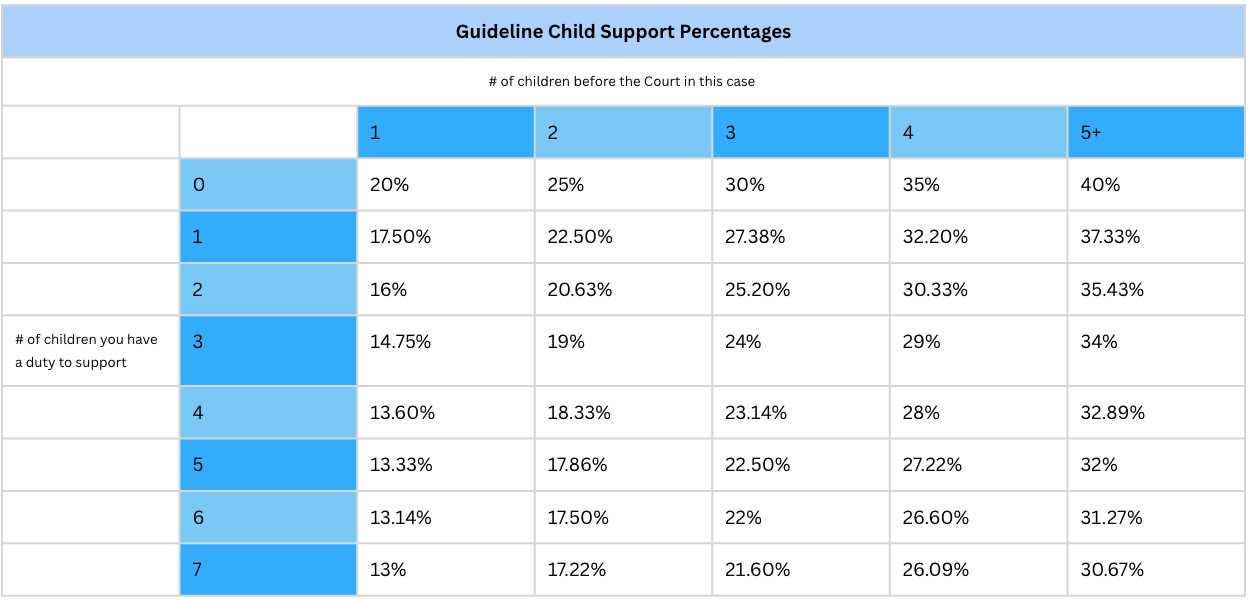
Texas courts use the child support guidelines to establish child support in most cases. The guidelines set out percentages based on the number of minor children before the court and the obligor’s net resources. Here are the basics:
What is the income “cap” for calculating child support?
The court generally looks to the first $11,700 of the obligor’s net resources.
What are “net resources?”
Net resources is most sources of income minus a few mandatory deductions. More specifically, the following are deducted from gross income: Social Security and Medicare taxes; Income tax for a single person; the cost of covering the child or children on health and dental insurance IF the obligor is providing or paying for insurance, union dues, and some types of retirement contributions.
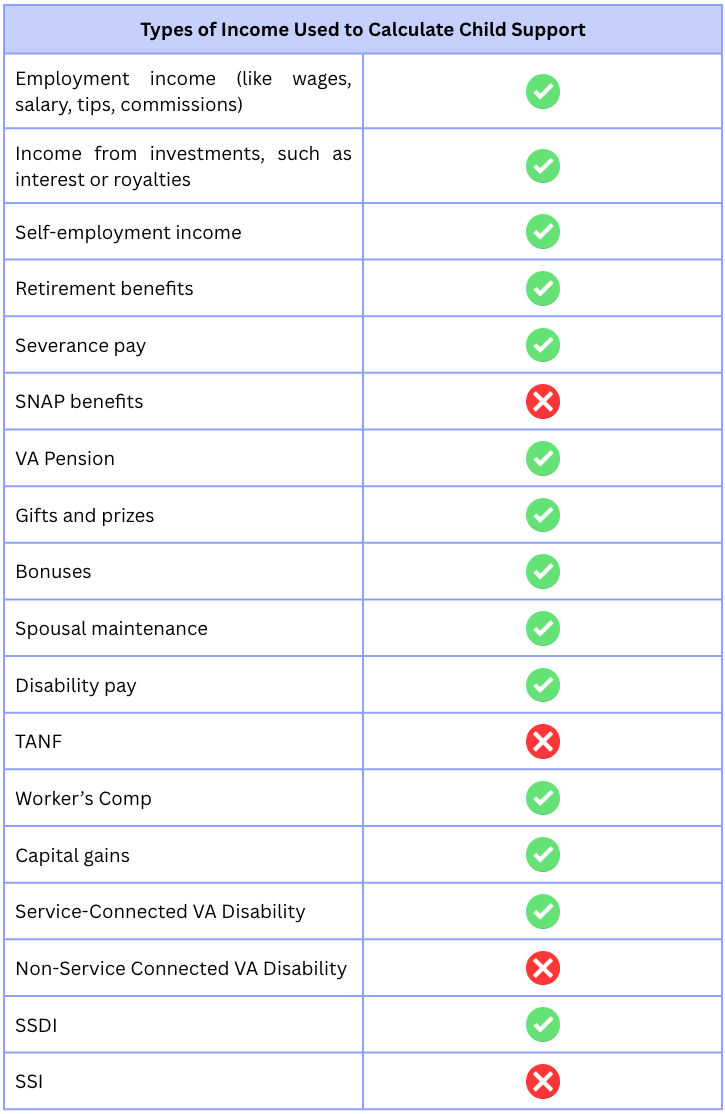
Here are the frequently used income sources which may be counted for the purposes of establishing child support:
What if the obligor isn’t working?
The Court can still assess child support. It is assumed by the Court the person can at least make minimum wage. If there is employment history by the obligor, the court can assess child support based on what the obligor would be making if they were working.
Can the court order above-guideline child support?
Yes. In some instances, the court may assess above-guideline child support. Generally, the court operates using the guidelines but there may be factors the court will deviate. For example, if one parent lives far away and never visits the child, that could be a reason for above-guideline child support.
Call our office today at 214-528-3344 to schedule a consultation and learn about how child support laws affect your prior order or your pending litigation.